


My church -- Agape Christian Fellowship in Charleston, W.Va. -- now has a website and a rudimentary pocast of Sunday sermons available. I say rudimentary because we're working to do a better job with it as soon as our technical expertise matches up with the vision. Here's hoping our heads are as big as our hearts.
You can visit the website here. It's a blogspot site for now, but it looks like we'll be moving to our own domain name in the near future. Stay tuned.
Speaking of local churches, a couple of larger churches in West Virginia have caught my eye, and both are related.
Chestnut Ridge Community Church in Morgantown, W.Va., is one of the fastest growing congregations in the state. Visit its website here.
The leaders up in Morgantown decided to plant a church in my hometown here in Charleston, and River Ridge Church is what they came up with. I had a chance to meet its pastor, Matt Santen, recently, and came away impressed. Visit their website here.
Finally, check out the lyrics to the song "I Need To Wake Up,", written by Melissa Etheridge for the documentary An Inconvenient Truth -- you know, Al Gore's environmental opus. I have a few thing I'd like to share about it in the coming days. To be thinking about it, just pay close attention to the words of the song.
Grace and peace ...
2007-04-12
0
comments


Ephesians514 Ministries

Here's the first discussion thread at a new Facebook group I've started. You can check out the group by clicking here, and can sign up for Facebook here. If you want to join, drop me an e-mail and we'll get you into the discussion group.
So, here's the discussion thread, re-posted below. Feel free to comment here on the blog, but it would be great to get the Ephesians514 Ministries discussion group up and running, so, please, head on over to Facebook, sign up for a free account and then join our group.
On to the thread ...
The following excerpt is from "Searching for God Knows What," by Don Miller.
"God wired us so that He told us who we were, and outside that relationship, the relationship that said we were loved and valuable and beautiful, we didn't have any worth at all. As horrible as it sounds, it would make sense that things of worth are things God loves, and things that don't have worth are things God doesn't love ... maybe a human is defined by who loves him. I know it sounds terrible, because we have always grown up believing that a person is valuable even if nobody loves them, and I certainly agree with that because God made everybody and the Bible very clearly states that He loves everybody. But if those relations are disturbed, the relatiopns between God and man, then we feel the desire to be loved and respected by other people instead of God, and if we don't get that love and respect, we feel very sad or angry because we know that our glory is at stake, that if there isn't some glory being shown through us by somebody ... we'll be dead inside, like a little light will go out and our souls will feel dark, like nothing can grow there."
Your thoughts? Is this the reason we try to hard to please other people? Are our priorities at fault because we are seeking love and approval from the world instead of from God? Or, perhaps, did you get something else out of the passage?
(Oh, by the way ... I highly recommend reading the book, and another by Miller called "Blue Like Jazz." Look them up on Amazon. You won't be sorry.)
2007-04-10
0
comments
 NOW that same day two of them were going to a village called Emmaus, about seven miles from Jerusalem. They were talking with each other about everything that had happened. As they talked and discussed these things with each other, Jesus himself came up and walked along with them; but they were kept from recognizing him.
He asked them, "What are you discussing together as you walk along?"
They stood still, their faces downcast. One of them, named Cleopas, asked him, "Are you only a visitor to Jerusalem and do not know the things that have happened there in these days?"
"What things?" he asked.
"About Jesus of Nazareth," they replied. "He was a prophet, powerful in word and deed before God and all the people. The chief priests and our rulers handed him over to be sentenced to death, and they crucified him; but we had hoped that he was the one who was going to redeem Israel. And what is more, it is the third day since all this took place. In addition, some of our women amazed us. They went to the tomb early this morning but didn't find his body. They came and told us that they had seen a vision of angels, who said he was alive. Then some of our companions went to the tomb and found it just as the women had said, but him they did not see."
He said to them, "How foolish you are, and how slow of heart to believe all that the prophets have spoken! Did not the Christ have to suffer these things and then enter his glory?" And beginning with Moses and all the Prophets, he explained to them what was said in all the Scriptures concerning himself.
As they approached the village to which they were going, Jesus acted as if he were going farther. But they urged him strongly, "Stay with us, for it is nearly evening; the day is almost over." So he went in to stay with them.
When he was at the table with them, he took bread, gave thanks, broke it and began to give it to them. Then their eyes were opened and they recognized him, and he disappeared from their sight. They asked each other, "Were not our hearts burning within us while he talked with us on the road and opened the Scriptures to us?"
The Resurrection: What came next?
 NOW that same day two of them were going to a village called Emmaus, about seven miles from Jerusalem. They were talking with each other about everything that had happened. As they talked and discussed these things with each other, Jesus himself came up and walked along with them; but they were kept from recognizing him.
He asked them, "What are you discussing together as you walk along?"
They stood still, their faces downcast. One of them, named Cleopas, asked him, "Are you only a visitor to Jerusalem and do not know the things that have happened there in these days?"
"What things?" he asked.
"About Jesus of Nazareth," they replied. "He was a prophet, powerful in word and deed before God and all the people. The chief priests and our rulers handed him over to be sentenced to death, and they crucified him; but we had hoped that he was the one who was going to redeem Israel. And what is more, it is the third day since all this took place. In addition, some of our women amazed us. They went to the tomb early this morning but didn't find his body. They came and told us that they had seen a vision of angels, who said he was alive. Then some of our companions went to the tomb and found it just as the women had said, but him they did not see."
He said to them, "How foolish you are, and how slow of heart to believe all that the prophets have spoken! Did not the Christ have to suffer these things and then enter his glory?" And beginning with Moses and all the Prophets, he explained to them what was said in all the Scriptures concerning himself.
As they approached the village to which they were going, Jesus acted as if he were going farther. But they urged him strongly, "Stay with us, for it is nearly evening; the day is almost over." So he went in to stay with them.
When he was at the table with them, he took bread, gave thanks, broke it and began to give it to them. Then their eyes were opened and they recognized him, and he disappeared from their sight. They asked each other, "Were not our hearts burning within us while he talked with us on the road and opened the Scriptures to us?"
Read the IVP Commentary here, the Matthew Henry commentary here and the Oswald Chambers commentary from "My Utmost for His Higest" here.
2007-04-03
0
comments

Back soon ...

Basketball season is over ... and the search for a new coach will soon be, too, thank God. I'll be back to writing in no time.
In the meantime, enjoy this photo from a recent trip to New York ... and reflect on the awesome joy of knowing all about The Cross.
Speaking of The Cross, while you're at it, check out this video, courtesy of Igniter Media (via YouTube).
2007-02-24
0
comments
Best ... and worst ... airports
Did you know it takes about 14 hours to fly from Bradley International Airport outside of Hartford, Connecticut to Yeager Airport in Charleston, West Virginia? It's true. (Well, if you fly Delta, it is.)
I was jotting some stuff down in my travel journal while waiting to board a plane at Hartsfield-Jackson International in Atlanta, and two things occurred to me: 1) I'd been to enough airports and been on enough airplanes to actually make a relatively comprehensive list of the best and worst airports our great country has to offer, and 2) I'd been either sitting in a terminal or on an airplane so long, burning through at least three magazines, a novel, several playlists on my MP3 player and wandering aimlessly that the only thing left to do was actually write said comprehensive list.
It's late right now, and I can't sleep. I'm also craving some candy -- I gave up sweets, soft drinks, etc., for Lent -- and I need something to take my mind off it. Thus, this list which, if you're needing to take a flight anytime soon -- and, really, I'd suggest finding some other method of travel; walk if you have to -- might come in handy. Call it my act of public service of the week, if you will. You're welcome.
First, a few ground rules. I've disqualified Columbus International Airport in Ohio because A) it was from CMH that I took my first flight, and I was sufficiently excited (I was 16 at the time) to render any critique of the place moot. It could have been LaGuardia and I would have thought it cool (OK, so maybe not); and, B) I didn't include Barajas International Airport in Madrid, Spain, for much the same reason: it was my first time overseas, and I was just thrilled that a man at baggage claim could understand my broken Spanish. Again, it could have been a dump and I wouldn't have cared, I was too busy grinning from ear to ear that I was in another country.
So, without further ado -- except to say that on my next long business trip (in three weeks to New York City for a few days), I'm taking Amtrak ... seriously -- here's my list of the best and worst airports I've ever had the misfortune of setting foot in. Drumroll, please ...
17) Washington-Dulles International Airport.
Pros: Um, well ...
Cons: I've never flown from IAD on time, the last time I flew there the plane almost crashed (I'm not kidding), the tiny terminal at which all planes to or from my home airport (CRW) is so small there's literally nothing to do other than walk around in circles. I just hate the place.
16) Newark-Liberty International Airport
Pros: See Washington-Dulles
Cons: Security lines are monstrosities, everyone is as rude as a Parisian waiter serving an American from the South, air traffic is so bad you can't get anywhere on time, the hallways are narrow, the bathrooms are dirty ... I could go on.
15) Detroit-Wayne County
Pros: See Newark-Liberty
Cons: It's old, dirty and getting to baggage claim is like navigating Pan's Labyrinth.
14) Hartsfield-Jackson International Airport, Atlanta
Pros: It's big enough that there's plenty of places to eat, get a cold drink, a magazine, etc.
Cons: It's the busiest airport in the East, so good luck getting anywhere on time. No one seems to know what they're doing. Your departure gate will change at least five times ... if you're lucky. The hallways are pretty wide, but there are so many people there's still nowhere to walk. ATL is just too, too busy.
13) New York-LaGuardia
Pros: Flying in and out is always a treat, just for the views of the city.
Cons: Very, very dirty, and the hallways are more narrow than Nicole Richie's waist.
12) Roy Rogers International Airport (Oklahoma City)
Pros: Very wide hallways. Very quiet, and not at all busy so you can get away from people.
Cons: Security there is as tight as anywhere I've been, which isn't a bad thing until it takes you an hour to get through. If you're hungry, you have a choice of ... well, very little, in fact. I think there are two restaurants, and both serve cold food. Yum.
11) Chicago-O'Hare International Airport
Pros: I've been to large shopping malls that have fewer stores. Hallways are wide, and there are lots of places to sit.
Cons: It's as busy as ATL.
10) Bradley International Airport, Hartford
Pros: It's small, laid back. In the Delta terminal there are these great comfortable sofas that are fantastic for napping.
Cons: The in-terminal airport staff are so clueless, I had to tell a guy at the Delta terminal at what airports to look for additional flights to get me on when mine was cancelled. He apparently doesn't know what a computer is.
9) Providence/T.F. Green International Airport
Pros: Again, it's small, laid back.
Cons: Bring a book. There's nothing else to do when you get there.
8) Syracuse-Hancock International Airport
Pros: Another small, quiet airport.
Cons: The weather can be brutal, making for some rough flights in and out.
7) Philadelphia International Airport
Pros: Ground transportation is really convenient. The city views flying in and out are pretty cool.
Cons: It's another busy, busy airport.
TOP SIX COMING TOMORROW.
0
comments


Have a heart


I don't know why this is bothering me so badly -- perhaps it's knowing, as a song by Casting Crowns puts it, that there's a storm raging inside this young woman's soul. I've been there, when the soul is stirred not by the gentle ebbs and flows of daily life, but swirling in a storm whose only logical conclusion is misery.
See that poor girl there? She's hurting. Somewhere along the way, her life has taken a dangerous turn, and you know what our response is? To glance at pictures of her plastered across magazines as we wait to buy our gallon of milk, rubber-necking just as at a car wreck, hoping to see a tragedy. Our wish is being granted. That tragedy is happening right now, in real time. Shame on all of us for licking our chops as it happens.
Watch this video, via YouTube (I'd embed it directly here, but I've been having some problems doing so lately.) It's late night talk show host Craig Ferguson, describing the storm that once raged in his life and his admirable decision to not poke fun at Britney Spears.
What's it hurt?, you say. Hey, she asked for it, right? Wanted to be famous. Made herself a target by making stupid decisions, parading half-naked for the paperazzi (sp?) and then having the audacity to be upset when the press turned ugly. OK, so maybe all of that is true. But, as Ferguson points out in his monologue, Britney Spears is, what, 25 years old? "She's a baby herself," he says.
This isn't the thing I normally write about, but for some reason I'm heartbroken over what has happened to this young woman. I don't know why. Maybe it's because I've been there, where she is, and was fortunate enough not to have the national media following me around and pontificating on what a bad person I was each time I screwed up. Truth be told, I screwed up probably more than Britney Spears.
So here's the thing: stop reading about her. Stop talking about her. Don't gawk at her pictures in the tabloids. Don't crinkle your nose and say to your friends, "Did you see how bad she looked in that picture?" Or, "She's such a terrible mother." If you see her newly bald head on your television screen, turn the channel (you shouldn't be watching "Access Hollywood" or "Entertainment Tonight" anyway). Don't buy "People" magazine if there's even so much as a mention of her.
I'm begging you to do two things: first, pray for her. Ask God to reveal Himself to her, to soothe her spirit, to help her find the truth of love. Not love from whatever deadbeat who wants to exploit her, but the love of Christ, the only person who can heal her spirit.
And, second, just leave the poor girl alone.
2007-02-16
0
comments

For week ending 2-17-07
Labels: Christian news, news
Madonna: "We All Need to be Like Jesus" (Christian Post)
That's very true, although I'm sure she and I would disagree on what that means. For instance, she says that her recent concert performance, which includes a scene where she is mounted on a large cross, is all about Christ's message of "loving thy neighbor and tolerance (emphasis mine)."
Why is it most people want to define "tolerance" as turning a blind eye to sin?
Be thankful that you won't be attacked when leaving Sunday School this week.
Bottom line? The best hope for reducing recidivism in inmates is the hope found in Christ. I suppose we should stick with outdated paradigms of prisoner rehabilitation. Since that's working so well.
0
comments

Just been takin' a short break ... lots of work travel, sick kids and the like.
Stay tuned ... same Bat time, same Bat channel.
Hiatus

Just been takin' a short break ... lots of work travel, sick kids and the like.
Stay tuned ... same Bat time, same Bat channel.
2007-01-23
0
comments

Compassionate Conservatives
Study: Religious people give more to charities than secular (Christianity Today)
You're not surprised, are you?
Baptist Megachurch Fires Minister After Probe
A longtime minister of Bellevue Baptist Church was fired weeks after being suspended for what the church called "a moral failure" 17 years ago and after an internal investigation amid allegations of child abuse. (AP, via Christian Post)
Sigh ...
Binge Drinking Common Among Teens
NASHVILLE, Tenn. --The Centers for Disease Control and Prevention has found that 69 percent of students who reported binge drinking indulged in the activity on more than one occasion in the past 30 days. (Lifeway.com)
At least I waited until I was 21.
When Not All Publicity Is Good Publicity
Alexandra Pelosi finished her HBO documentary on evangelical America and then her main guide, Ted Haggard, was ruined by a sex scandal. (Newseek, via MSNBC)
You know, it sounds to me like she was probably under conviction via Haggard's witnessing ... then sin goes and ruins it, just as it always does.
... The U.S. House of Representatives voted in December to allow debtors in Chapter 13 bankruptcy to tithe. The bill responds to a New York court's August ruling that a 2005 federal bankruptcy reform bill bars middle-income debtors from making charitable contributions. The Senate previously passed the bill, and President Bush is expected to sign it
For week ending Jan. 27, 2007
Compassionate Conservatives
Study: Religious people give more to charities than secular (Christianity Today)
You're not surprised, are you?
Baptist Megachurch Fires Minister After Probe
A longtime minister of Bellevue Baptist Church was fired weeks after being suspended for what the church called "a moral failure" 17 years ago and after an internal investigation amid allegations of child abuse. (AP, via Christian Post)
Sigh ...
Binge Drinking Common Among Teens
NASHVILLE, Tenn. --The Centers for Disease Control and Prevention has found that 69 percent of students who reported binge drinking indulged in the activity on more than one occasion in the past 30 days. (Lifeway.com)
At least I waited until I was 21.
When Not All Publicity Is Good Publicity
Alexandra Pelosi finished her HBO documentary on evangelical America and then her main guide, Ted Haggard, was ruined by a sex scandal. (Newseek, via MSNBC)
You know, it sounds to me like she was probably under conviction via Haggard's witnessing ... then sin goes and ruins it, just as it always does.
Gender and the Pulpit
Workplace difficulties can arise for trangendered persons in nearly all professions, but what about those who are called to work for God? (Newseek, via MSNBC)
No comment.
Beliefwatch: Blasphemy
'Hi my name is Lindy and I deny the existence of the Holy Spirit and you should too.' (Newsweek, via MSNBC)
I wonder if God will allow someone to go to Hell for stupidity
Briefly... The U.S. House of Representatives voted in December to allow debtors in Chapter 13 bankruptcy to tithe. The bill responds to a New York court's August ruling that a 2005 federal bankruptcy reform bill bars middle-income debtors from making charitable contributions. The Senate previously passed the bill, and President Bush is expected to sign it
0
comments

"The LORD is my rock, and my fortress, and my deliverer; my God, my strength, in whom I will trust; my buckler, and the horn of my salvation, and my high tower."
(Psalm 18:2)
Check these out ...

"The LORD is my rock, and my fortress, and my deliverer; my God, my strength, in whom I will trust; my buckler, and the horn of my salvation, and my high tower."
(Psalm 18:2)
In the interest of liberating anyone out there who may want to kill some time while at work )not that I'm trivializing the content here; it's really, really good stuff ... the second link is downright heart-wrenching), here are a couple of links that are worth your while.
(Oh, before I forget ... I added a daily devotional to the site, which is in the margin to your right, below the links and near the daily scripture. Also, I removed some links in the margin and added a few more Christian bloggers that are worth reading. I'm also planning a few more structural changes like that in the coming days, so y'all come back now, y'hear?)
Five Streams of the Emerging Church
It's been awhile since we broached the subject of the Emerging Church "conversation," so here's another link for those of you who might not be familiar with it, courtesy of Christianity Today magazine and Scot McKnight, who has emerged (get it? get it? Oh, nevermind) as one of the leading evangelical experts on the Emerging Church phenomenon.
Sarah McLachlan -- "World on Fire" music video
I tried to just post the video itself so you wouldn't have to navigate away from this page, but couldn't do it. Watch it ... pretty powerful stuff.
Selah.
2007-01-20
0
comments

The Digital Church

From where I sit right now, at this very moment, I'm surrounded by modern technology.
On the desk in front of me are two MP3 players, a digital camera and a positively Neanderthalian calculator. To my right is a portable DVD player sitting atop a device that could, at any moment I wish and with a push of a button, print out these very words on a piece of paper. My printer is also a scanner and copier, if that's your thing.
I have a hand-held alarm clock right here that gives the time in London, Beirut and Osaka simultaneously. A video camera. A cellular telephone.
Oh, there are these things called books surrounding me here in my little home office, to be sure. But the information contained in them is far more easily accessed by an Internet search engine -- also available in the flashest of flashes.
I could "Google" something right now. In fact, I just did -- for the heck of it and just 'cause I could, you understand. There are 40,300 entries for the query "pepperjack cheese," in case you're wondering.
I'm nearly a year into the MP3 player revolution -- details here -- and I couldn't be more happy with it all. I was reluctant at first, if only because it's one of those "everyone is doing it" things and I am naturally suspicious of trends and what-not. Maybe that just means I'm not hip. Oh well.
But what I've discovered is that my MP3 player has become one of the most important tools in my Christian walk. You read that correctly. It's become a tool for worship -- I listen to tons of good contemporary Christian music on it -- and for spiritual instruction. Indeed, I listen to more sermons, teachings and devotionals (via podcasts) than anything else on the little gadget. In many ways, it's revolutionized my devotional life.
By far, there are more podcast downloads of sermons, devotionals, etc. from Mars Hill Church in Seattle than anything else. Indeed, I download PDF files of sermon notes each week, read them and listen to the subsquent sermon on my player. As I was updating some files the other day a thought occurred to me: am I a "virtual" member of Mars Hill Church?
It's an interesting concept to consider, and it highlights the way technology has transformed the Church, i.e., the Body of Christ. For instance, the church in which I grew up has limited technology. If I wanted to listen to sermon I missed, I'd be welcome to ... I'd just have to dig through the tapes of past services. Problem is, I'm not sure I even have anything on which to listen to tapes. That little church doesn't have CDs, let alone MP3s.
Now, there's nothing wrong with that, per se. That church, Bancroft Church of God Mission, is faithful to the mission to which God called it. It faithfully serves those people who attend and the community in which it exists.
It's just that, for that church's generation, the community consists of about 180 regular members and a town of some 300 people in Putnam County, W.Va. For me and my generation, tranformed by modern technology and the information revolution ushered in through new media and the Internet, our community is the world. It's an exciting and terrifying prospect.
In the past week, I've listened to a teaching from Rick Warren (of Saddleback Community Church and "The Purpose Driven Life" fame); a sermon from Bluer Community Church in Minneapolis, Minnesota; a theological roundtable from author Don Miller ("Blue Like Jazz"); several discussions related to Mars Hill's Film and Theology night; and, of course, Mark Driscoll's latest sermon (the first of a series on the Old Testament book of Ruth).
(Oh, by the way, in the interest of full disclosure, Drisoll has been the source of some controversy in the blogosphere lately, speficially about his comments on the Ted Haggard scandal and the role of women in church leadership. The blog that started the whole uproar is here, with follow up entries here, here, here and here. A blog from one of his most vocal critics can be found here.)
In answer to an internal question that sparked my interest, no, I'm not a member of Mars Hill Church. Being a member of a Christian fellowship is just that: it's fellowship. It's more than listening to sermons and studying your Bible. It's a sense of community, and there's no sense of community between me and my MP3 player.
But the issue remains: as technology and interpersonal media continues to shrink our world -- as the theory of six degrees of separation is turned on its ear by MySpace, Internet message boards and Google Earth -- I think we have a moral responsibility to fulfill our mission to the global community and to engage our culture which, like it or not, is a digital, information-seeking society.
It can be scary, yes, and my first response is to move to a cabin somewhere and cook my meals over an open flame. But that's taking a Ted Kaczynski-ish approach, don't you think?
Instead, our role should be to engage the culture head on, and, like Paul in Athens, use it to change the world for Christ.
(copyright 2006, andrew j. beckner. all rights under copyright reserved)
0
comments
Evangelicals United for Darfur
"And the king will answer them, 'Truly I tell you, just as you did it to one of the least of these who are members of my family, you did it to me.'" - Matthew 25:40
I didn't write what's below. It's taken from Evangelicals for Darfur, a non-profit organization trying to shed some much-needed light on what is one of the greatest humanitarian crises in African history -- and that's saying a lot.
Anyway, I hope you'll take a moment to visit the website listed below and consider ways you can help. There are a number of ideas on the website on how to get involved. I think all of us -- Christians and nonChristians alike -- share a moral responsibility to speak out when people are suffering. The war in Iraq has diverted a lot of attention away from the Sudanese crisis, and it's up to all of us to recognize there's more to the world's problems than what you see on CNN every day.
I hope you'll take a small piece of action at least by sending an e-mail to your legislator or the White House to signal that it's time for urgent action. Sure, you'll get a form letter back, but the more e-mails the White House and Congress get, the more serious they'll take this crisis.
So, without further ado, here's the lowdown:
Evangelical Christians are uniting in an urgent effort to bring an immediate end to the genocide in Darfur.
In recent weeks, evangelical leaders have discovered profound unity on this crisis. Believing that God was calling them to act, a number of those leaders began talking about how evangelical Christians could respond together to this call. Those conversations led to the creation of Evangelicals for Darfur, a campaign that brings together media, web, and grassroots advocacy to call for an end to the senseless suffering in Darfur.
A broad and diverse group of evangelical leaders were eager to participate in this project. The leaders signed onto ads that are currently running in the nation's major newspapers calling on our nation's political leaders to boldly lead the effort to stop the suffering. As evangelical Christians, we now have the chance to add our voices to this important message.
I hope you'll visit www.evangelicalsfordarfur.org and decide to join in this urgent effort. I am deeply encouraged by the broad spectrum of Christians who are speaking out together on this issue. For in matters of life and death, there is no left or right, there is only right and wrong. Together we can help make a life-saving difference for our brothers and sisters in Darfur.
Click here to learn more and to add your voice to this campaign.
2007-01-15
0
comments
Still here ...
I hereby offer you, whoever YOU may be -- family member (most likely), person bored at work and surfing the Internet who stumbled across a random blog (quite possibly), etc. -- the most important link you'll ever find on this humble blog.
Curious? Click here ...
I'm just back from a blog break (after taking courses in alliterative prose ... just kidding). Holidays, tons of work-related travel (and more to come, unfortunately) and just a general lack of inspiration has conspired to keep me from writing lately.
Anyway, I've got a few things on my Stegosaurus-sized brain and, because of the premium on room up there, it's best I get rid of it. I'll be doing so in the next few weeks, and I hope you'll enjoy it.
In the meantime, check this out.
Oh, real quick: did you know that God loves you? Sounds silly, maybe, and certainly Pollyanna-ish. It also happens to be true.
Want proof? Click here.
2006-12-23
0
comments

In the latest evidence that "Newsweek" is seemingly obsessed with Christianity, the cover story and subsquent sidebars address the issue of "The world into which Jesus was born and raised has shaped morals for two millennia. How Jewish mores became Christianity's customs."
(UPDATE: The magazine's stories miss a lot. A lot. More af a line-by-line analysis later.)
OK, OK, I confess. It was the promise of an interview with Sylvester Stallone and the 1980-auteur's revival of the "Rocky" franchise with the fifth installment, titled "Rocky Balboa."
(Contrary to popular belief -- or this link -- there is no such thing as a "Rocky V." You hear me? It didn't happen.)
If I had a chance to meet, say, five famous people, alive or dead, Stallone would be on the list. Call it corny or a childish fantasy, but I love those movies. They are, as a whole, my favorite movie of all time. Bar none.
I still have, in my possession, a pair of Rocky swimming trunks; a "Rocky IV" cut-off T-shirt; a pair of boxing gloves that, in the absence of an opponent (read: my brother or my dad) I would use to hit myself in the face while acting out scenes from the movies; and, my personal favorite, a long-sleeved T-shirt that I myself designed back when you could find those T-shirt kiosks in the mall what would outfit the shirt of your choice with any number of cheesy images (wizards, Trans-Ams, buxom babes in bikinis, etc.) and, then, personlize them with puffy letters. If you were born in the early- to mid-70s, you know what I'm talking about. Anyway, my shirt was white with black sleeves, a snarling tiger on the front, puffy yellow letters down each arm that say "Rocky Balboa" and, on the back, even bigger puffy letters (black this time) that say, "Eye of the Tiger." Needless to say, my career as a clothes desinger coincided with "Rocky III," which coined the "Eye of the Tiger" phrase.
You know why I would like to meet Stallone? I want to shake his hand, pat him on the back, and say, "thanks." Without those movies, my childhood would not have been as good as it was. And I'm being completely serious.
The question all this raises is why are we so drawn to underdog stories? The "Rocky" franchise bills itself as "The Greatest Underdog Story of Our Time," and I don't doubt that's true. A down-on-his-luck fighter gets an inexplicable shot at the heavyweight champion of the world, trains his butt off and, in the greatest heavyweight fight of all time (if it were real, that is), takes the champ all 15 rounds before losing. Thing is, he didn't really lose ... oh, he lost the fight, but he won his dignity, his respect.
Of course, in subsequent movies, things change. He gets famous, rich, etc. But the point of it all is the same: a guy "whose whole life was a million-to-one shot" makes something of himself from the sweat of his brow ... and the meat of his fists. Now that's a story.
The Greatest Underdog Story of Our Time? Yeah, I buy it.
But it's not the Greatest Underdog Story of All Time. Another tale takes that title.
Here's an illustration that you may not recognize, but bear with me: Let's say there's this unwed woman living in Afghanistan. She's nine-month's pregnant, and homeless. She's forced by the Taliban to go back to where she was born in a small region near the Pakistani border to register with the authorities, not only so they can keep track of her, but because they are instituting a "taxation without representation" system to the provinces it governs.
She's broke and overtaxed, living in a land that erupts from time to time by civil war and ruled by a government with no legitimate claims to do so. When she finally has her baby, she does so without the benefit of a doctor and, out of fear for the baby's safety in a land where a ruler like Osama Bin Laden is running the show, she takes off for Africa, where's she's never been. She's 14 years old.
That's a modern context, but it's the kind of circumstances into which Jesus was born. Was there any historical figure that was as much an underdog as Jesus? Growing up, Jesus knew the poor, the oppressed and the powerless firsthand.
Is it any wonder that the first person He ever told He was the Messiah was a woman who'd been married five times and was living with a man that wasn't number six. Jesus associated with these types of people for a reason: that's who He came to save.
And because He started His life in such rough-and-tumble circumstances, He was the ultimate underdog, whether He was God or not.
Jesus loved people for whom the future is not secure. He could relate.
Do you have an underdog's attitude? Do you make an effort to help feed the woman in line at Go-Mart with the handful of food stamps. Do you donate your time at the homeless shelter? Are you an underdog? There are many people who are.
This is, of course, the worst time of year for those against whom life has turned its back. And that's why Jesus can relate so much ... He came into this world as God, yes, but He was the biggest underdog of them all.
The Greatest Underdog Story of All Time

In the latest evidence that "Newsweek" is seemingly obsessed with Christianity, the cover story and subsquent sidebars address the issue of "The world into which Jesus was born and raised has shaped morals for two millennia. How Jewish mores became Christianity's customs."
(UPDATE: The magazine's stories miss a lot. A lot. More af a line-by-line analysis later.)
OK, OK, I confess. It was the promise of an interview with Sylvester Stallone and the 1980-auteur's revival of the "Rocky" franchise with the fifth installment, titled "Rocky Balboa."
(Contrary to popular belief -- or this link -- there is no such thing as a "Rocky V." You hear me? It didn't happen.)
If I had a chance to meet, say, five famous people, alive or dead, Stallone would be on the list. Call it corny or a childish fantasy, but I love those movies. They are, as a whole, my favorite movie of all time. Bar none.
I still have, in my possession, a pair of Rocky swimming trunks; a "Rocky IV" cut-off T-shirt; a pair of boxing gloves that, in the absence of an opponent (read: my brother or my dad) I would use to hit myself in the face while acting out scenes from the movies; and, my personal favorite, a long-sleeved T-shirt that I myself designed back when you could find those T-shirt kiosks in the mall what would outfit the shirt of your choice with any number of cheesy images (wizards, Trans-Ams, buxom babes in bikinis, etc.) and, then, personlize them with puffy letters. If you were born in the early- to mid-70s, you know what I'm talking about. Anyway, my shirt was white with black sleeves, a snarling tiger on the front, puffy yellow letters down each arm that say "Rocky Balboa" and, on the back, even bigger puffy letters (black this time) that say, "Eye of the Tiger." Needless to say, my career as a clothes desinger coincided with "Rocky III," which coined the "Eye of the Tiger" phrase.
You know why I would like to meet Stallone? I want to shake his hand, pat him on the back, and say, "thanks." Without those movies, my childhood would not have been as good as it was. And I'm being completely serious.
The question all this raises is why are we so drawn to underdog stories? The "Rocky" franchise bills itself as "The Greatest Underdog Story of Our Time," and I don't doubt that's true. A down-on-his-luck fighter gets an inexplicable shot at the heavyweight champion of the world, trains his butt off and, in the greatest heavyweight fight of all time (if it were real, that is), takes the champ all 15 rounds before losing. Thing is, he didn't really lose ... oh, he lost the fight, but he won his dignity, his respect.
Of course, in subsequent movies, things change. He gets famous, rich, etc. But the point of it all is the same: a guy "whose whole life was a million-to-one shot" makes something of himself from the sweat of his brow ... and the meat of his fists. Now that's a story.
The Greatest Underdog Story of Our Time? Yeah, I buy it.
But it's not the Greatest Underdog Story of All Time. Another tale takes that title.
Here's an illustration that you may not recognize, but bear with me: Let's say there's this unwed woman living in Afghanistan. She's nine-month's pregnant, and homeless. She's forced by the Taliban to go back to where she was born in a small region near the Pakistani border to register with the authorities, not only so they can keep track of her, but because they are instituting a "taxation without representation" system to the provinces it governs.
She's broke and overtaxed, living in a land that erupts from time to time by civil war and ruled by a government with no legitimate claims to do so. When she finally has her baby, she does so without the benefit of a doctor and, out of fear for the baby's safety in a land where a ruler like Osama Bin Laden is running the show, she takes off for Africa, where's she's never been. She's 14 years old.
That's a modern context, but it's the kind of circumstances into which Jesus was born. Was there any historical figure that was as much an underdog as Jesus? Growing up, Jesus knew the poor, the oppressed and the powerless firsthand.
Is it any wonder that the first person He ever told He was the Messiah was a woman who'd been married five times and was living with a man that wasn't number six. Jesus associated with these types of people for a reason: that's who He came to save.
And because He started His life in such rough-and-tumble circumstances, He was the ultimate underdog, whether He was God or not.
Jesus loved people for whom the future is not secure. He could relate.
Do you have an underdog's attitude? Do you make an effort to help feed the woman in line at Go-Mart with the handful of food stamps. Do you donate your time at the homeless shelter? Are you an underdog? There are many people who are.
This is, of course, the worst time of year for those against whom life has turned its back. And that's why Jesus can relate so much ... He came into this world as God, yes, but He was the biggest underdog of them all.
(copyright andrew j. beckner, 2006. all rights under copyright reserved.)
2006-12-22
0
comments
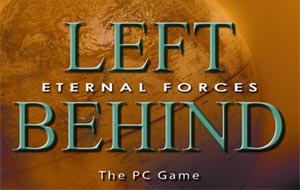
Take a minute and read this story from the Los Angeles Times:
The setting: post-apocalypse Manhattan.
The heroes: the Tribulation Force.
Their mission: defeat Satan by bringing the world to Christ.
Inspired by a hugely popular book series, the new video game "Left Behind: Eternal Forces'' deposits players in a futuristic world where born-again Christians must use prayer and song to convert the infidels -- or tanks and snipers to blow them away. The game is being promoted to Christian teens as "the ultimate fight of good vs. evil.''
But with just eight days left in the Christmas shopping season, it's coming under heavy fire.
A coalition of liberal Christian groups has complained that the video game is too violent, intolerant and divisive to be properly called Christian.
"It's essentially a training video for faith-based killing, marketed to children,'' said the Rev. Tim Simpson, a volunteer pastor with a Presbyterian church in Jacksonville, Fla.
There is no blood or gore in the game; when bodies fall, they simply disappear. And you rack up more points by converting your enemies to Christianity than by killing them. But it's hard to advance with a strictly pacifist approach, since you're constantly under attack by the antichrist's army -- which resembles the United Nations. (You atone for mowing down the bad guys by pushing a ‘prayer' key, which builds your strength for more fighting.)
"I can't think of anything more antithetical to the gospel of Christ,'' said Simpson, who runs an organization called the Christian Alliance for Progress. "The message is that God intends for everyone who doesn't share your faith to be whacked.''
Game creator Troy Lyndon dismisses such objections as alarmist. He says the point of the game is to spur teens to start thinking about "matters of eternal importance'' -- such as the fate of their souls.
Players advance by picking up clues that are supposed to get them thinking about the Biblical prophesy of the Rapture, when believers expect to ascend to heaven, leaving behind a ravaged Earth. The game is set after the Rapture, when those left behind are divided into two warring camps: born-again believers against the forces of Satan.
Lyndon acknowledges that most gamers won't tarry on the scriptural analysis in the clues when there are battles to be fought and heathens to evangelize. But those who care to learn more can click over to a Web site that invites them to accept Christ -- and incidentally, renounce Darwin.
"We're out to make a difference,'' said Lyndon, the chief executive of Left Behind Games Inc., based in Murrieta, Calif.
The game has been endorsed by the conservative Christian group Focus on the Family. In an online review, the ministry noted that warfare is integral to the game, just as it is to the "Left Behind'' novels, which have sold 63 million copies. But the reviewer called concerns about the violence exaggerated, writing: "Eternal Forces is the kind of game that mom and dad can actually play with Junior -- and use to raise some interesting questions along the way.''
The liberal Christian groups that oppose the game have gathered 28,000 signatures of protest through the Web site DefConAmerica.org. By comparison, the conservative American Family Association last year collected 500,000 pledges to boycott Target for using "holiday'' instead of "Christmas'' in its marketing.
It's unclear whether the protest against the video game has had much effect. Andy Butcher, editor of Christian Retailing magazine, said Christian bookstores "have been a little slow'' to stock it. But he attributes that not to unease about the content, but to fear of competition from Wal-Mart, which sells "Eternal Forces'' for less than $40. (Christian retailers can't match Wal-Mart's volume discounts, so they're selling it for $45 to $60, sometimes bundled with a Bible.)
For his part, Lyndon says the controversy "has been great for the product,'' though he won't release sales figures. Certainly, the fracas has given the game worldwide media exposure; just last week, Lyndon was interviewed by German TV and British radio.
Between interviews, he's been supervising fixes to the game, such as muting one character's annoying tic of repeatedly shouting "Praise the Lord!'' He's also working on a sequel.
"I want to show that thinking about what may happen when you die can be as fun as being in an Indiana Jones film,'' Lyndon said. "It's an adventure.''
*******************************
Frankly, as a Christian, this kind of stuff makes me cringe. Reading the "Left Behind" novels is one thing (which I did, and enjoyed). Acting it out in some corny video game that will do little more than elicit guffaws from the media is something else entirely.
Maybe this isn't the best idea

Take a minute and read this story from the Los Angeles Times:
The setting: post-apocalypse Manhattan.
The heroes: the Tribulation Force.
Their mission: defeat Satan by bringing the world to Christ.
Inspired by a hugely popular book series, the new video game "Left Behind: Eternal Forces'' deposits players in a futuristic world where born-again Christians must use prayer and song to convert the infidels -- or tanks and snipers to blow them away. The game is being promoted to Christian teens as "the ultimate fight of good vs. evil.''
But with just eight days left in the Christmas shopping season, it's coming under heavy fire.
A coalition of liberal Christian groups has complained that the video game is too violent, intolerant and divisive to be properly called Christian.
"It's essentially a training video for faith-based killing, marketed to children,'' said the Rev. Tim Simpson, a volunteer pastor with a Presbyterian church in Jacksonville, Fla.
There is no blood or gore in the game; when bodies fall, they simply disappear. And you rack up more points by converting your enemies to Christianity than by killing them. But it's hard to advance with a strictly pacifist approach, since you're constantly under attack by the antichrist's army -- which resembles the United Nations. (You atone for mowing down the bad guys by pushing a ‘prayer' key, which builds your strength for more fighting.)
"I can't think of anything more antithetical to the gospel of Christ,'' said Simpson, who runs an organization called the Christian Alliance for Progress. "The message is that God intends for everyone who doesn't share your faith to be whacked.''
Game creator Troy Lyndon dismisses such objections as alarmist. He says the point of the game is to spur teens to start thinking about "matters of eternal importance'' -- such as the fate of their souls.
Players advance by picking up clues that are supposed to get them thinking about the Biblical prophesy of the Rapture, when believers expect to ascend to heaven, leaving behind a ravaged Earth. The game is set after the Rapture, when those left behind are divided into two warring camps: born-again believers against the forces of Satan.
Lyndon acknowledges that most gamers won't tarry on the scriptural analysis in the clues when there are battles to be fought and heathens to evangelize. But those who care to learn more can click over to a Web site that invites them to accept Christ -- and incidentally, renounce Darwin.
"We're out to make a difference,'' said Lyndon, the chief executive of Left Behind Games Inc., based in Murrieta, Calif.
The game has been endorsed by the conservative Christian group Focus on the Family. In an online review, the ministry noted that warfare is integral to the game, just as it is to the "Left Behind'' novels, which have sold 63 million copies. But the reviewer called concerns about the violence exaggerated, writing: "Eternal Forces is the kind of game that mom and dad can actually play with Junior -- and use to raise some interesting questions along the way.''
The liberal Christian groups that oppose the game have gathered 28,000 signatures of protest through the Web site DefConAmerica.org. By comparison, the conservative American Family Association last year collected 500,000 pledges to boycott Target for using "holiday'' instead of "Christmas'' in its marketing.
It's unclear whether the protest against the video game has had much effect. Andy Butcher, editor of Christian Retailing magazine, said Christian bookstores "have been a little slow'' to stock it. But he attributes that not to unease about the content, but to fear of competition from Wal-Mart, which sells "Eternal Forces'' for less than $40. (Christian retailers can't match Wal-Mart's volume discounts, so they're selling it for $45 to $60, sometimes bundled with a Bible.)
For his part, Lyndon says the controversy "has been great for the product,'' though he won't release sales figures. Certainly, the fracas has given the game worldwide media exposure; just last week, Lyndon was interviewed by German TV and British radio.
Between interviews, he's been supervising fixes to the game, such as muting one character's annoying tic of repeatedly shouting "Praise the Lord!'' He's also working on a sequel.
"I want to show that thinking about what may happen when you die can be as fun as being in an Indiana Jones film,'' Lyndon said. "It's an adventure.''
*******************************
Frankly, as a Christian, this kind of stuff makes me cringe. Reading the "Left Behind" novels is one thing (which I did, and enjoyed). Acting it out in some corny video game that will do little more than elicit guffaws from the media is something else entirely.
Not that this news story isn't without its faults. To be sure, the reporter takes her cheap shots at all of us right-wing, gay-hating bigots who so foolishly believe that there's more to life than what we see out of our windows.
Specifically, she uses thinly-veiled, snide remarks about Christians with passages like: "born-again Christians must use prayer and song to convert the infidels" and "most gamers won't tarry on the scriptural analysis in the clues when there are battles to be fought and heathens to evangelize."
(Yes, yes ... all non-believers are infidels and heathens, and they're lucky we don't just all blow them away with shotguns and get it over with. Not only are we all ignorant, we're evil to boot.)
Yes, yes, we're all so terribly stupid for believing that God actually came to earth as a man, lived a sinless life and died to save the sins of the world and that, one day, we'll live with him in heaven for eternity. Please be patient with us. We are a little slow.
(Silly little Christian, myths are for kids.)
What's sad about all this is what gets lost in the shuffle: the very real fact that God exists, that Christ died for our sins and that, someday, He will judge us according to whether we have accepted His gift of salvation or rejected it.
I think games like "Left Behind: Eternal Forces" are misguided, as are the umpteen billion sequels to the original series of novels. If the goal is to interest more people in eschatology and bring the message of salvation to more people, then I pray God blesses those efforts.
But what I fear will happen is an inevitable backlash against this time of evangelism to the point that you'll continue to read these slanted stories that portray our faith as worthy of nothing more than a punch line. The only demographic (ethnic, cultural or religious) that it's perfectly OK to make fun of is born-again Christians. So come on, let's not make it any easier on them.
You know what? I have no problem with pointing out to people that there is a price to be paid for A) sin and B) not accepting the forgiveness to that sin.
It's just that the best way to do it isn't to set them in front of a video game where they can "mow down the bad guys by pushing a 'prayer key.'"
Instead, why not mow someone's grass? Why not send them a random card? Why not invite them for dinner and not spend all hour telling them how they're going to hell? Why not volunteer at a local food bank, give your coat to a coat drive, make a bologna sandwich and give it to that guy who always asks you for spare change on your way to work?
There's nothing wrong with having a sense of urgency for the lost when Christ could come back for His church at any time.
But there's a better way.
2006-12-18
2
comments

“Before Philip called you, when you were under that fig tree, I saw you.”
(John 1:48)
He can't see his own feet.
Not only are they moving too quickly -- indeed, the Galilean is running faster than he ever has before -- but the dust kicking up from the road is swirling around him in a red cloud.
It's a hot day in Bethsaida, and the man is sweating.
His uncut hair is a tangled mess of black curls atop his head. His modest tunic hangs off a well-tanned shoulder, and he has to slow down at times to make sure the whole thing doesn't fall off as he runs.
But he dares not stop. Slow down? Regrettably, yes. But stop? No. This is far too important a message to deliver.
Up ahead, Nathanael sits beneath a tree. He looks to his left, and sees the man running toward him.
Is that Philip?
It is.
Nathanael would normally smile at his best friend's arrival, but there's something in his eyes, something frantic, that tell Nathanael that something is … no, not wrong. That’s not the right word. By the time Philip makes it to the shade of the fig tree he is terribly out of breath, and his best friend is officially worried.
He spits the words in short gasps.
“He's here,” Philip says, barely managing the words. His right hand is on his own knee, his other gripping Nathanael's wrist, partly for support, but also to make sure he has his friend's attention. He’s bent over, staring down at the red dirt at his feet, squinting as the stinging sweat runs from his brow into his eyes. Some of it drips down and creates minute watery explosions on the ground. Overhead, the sun is bright.
“Who, Philip? Who is here?”
Philip raises his head sideways to look up. He's still bending over, still holding onto Nathanael's wrist, still fighting for air. The two men's eyes meet for this first time this day.
Nathanael can see his friend has been crying, but Philip appears neither hurt nor afraid. “Jesus,” Philip says. “Jesus is here. Jesus of Nazareth, Jesus the Christ, Jesus the Messiah. I've found Him.
“No, wait.”
Nathanael waits.
“He's found me.”
Imagine what it must have been like.
Philip and Nathanael's people had waited over a thousand years for this moment. Generations had passed from the world, each born with the promise that one day the Messiah would come, each with the hope that it would happen in their lifetimes, each with sorrow and sadness as they left this world judged by God's Old Covenant. All were seeking the one the prophets had promised would come and deliver them.
Today was that day for Philip and Nathanael.
(Take a minute to read John 1:43-50.)
Right there, in verse 43, Jesus, the Christ, the Messiah, the Lamb of God who was to take away the sins of this world, the one whom Philip's father, grandfather, great-grandfather and great-great grandfather, going all the way back to the days of Moses, the one whom all of them had been seeking ... right there, in that one verse, the very promise of God walks up to Philip in the middle of the afternoon on a typical day in Galilee and says, quite simply, “Follow me.”
Whew!
Nathanael thought his friend was crazy. Still, he was open when the call came.
Oh, it wasn’t as if he didn't question it ... he was a lot like us in that respect.
The Son of God? From Nazareth?
“Are you sure? Nazareth? That little hole in the wall?”
But when Philip said, “Come and see,” Nathanael came and saw.
That’s an admirable attitude, one borne out of a hope and expectation of the revelation of Christ. Jews in first-century Palestine were an expectant lot. They were under the yoke of oppression from a foreign empire, a daily reminder that their lives were not as fulfilled as they could be.
Sound familiar?
Our war is against our flesh, our human nature. Our invading empire is the sin raging rampantly within us.
That being the case, does our attitude reflect Phillip’s and Nathanael’s? Are we looking forward to Christ with expectation?
I’m not talking about His coming. I’m talking about every day, every morning when we wake up. Do we wait expectantly for Him and what He will accomplish to His glory through us?
We must be willing to “come and see.”
We cannot expect God to talk to us from across the country. We cannot expect Him to speak to us and reveal to us the purpose for which we have been created and the wonderful things we can accomplish through His power if we are sitting under a fig tree ... or, to modernize the story, if we are sitting on the couch wondering why God doesn't speak to us. We must step out, come and then see.
When Nathanael came to see what all the fuss was about, Jesus spotted him coming from a great distance. Likewise, the Lord knows when we are seeking Him. The Bible says, and I'm paraphrasing again, “draw close to me and I'll draw close to you.”
The amazing thing about this verse is that Jesus knew immediately how He could use Nathanael for the Kingdom of Heaven.
Still, ol' Nathan was confused. He'd probably never seen this man before (and, if he did, he only knew Him as a Jewish carpenter from a nearby town).
But Jesus knew him. “I saw you ... come out from that fig tree,” Jesus was calling.
He's calling us, too.
God desperately wants a more intimate relationship with us ... He longs to speak to us, and when we truly surrender our lives to Him, we'll know His voice.
Here's where it all comes together in this story. Nathanael may not have ever seen Jesus before. But when He heard about Him, he came out from under that fig tree.
The result? When Christ spoke, Nathanael knew because he had heeded the call.
“Rabbi! You are the Son of God! You are the King of Israel!” Nathanael said. He only heard but one sentence from the Master, and Nathanael knew.
What was his reward for heeding the call, for knowing the voice of God? It's the same one we can have. You can imagine Christ saying the same words to you as He did to Nathanael that hot day in Bethsaida, the same words he speaks when He answers prayer, when we read His word, when He wraps us up in His loving arms by showering us with blessings. It's all there for us, if we really want it.
And, like He said to Nathanael, we could easily imagine Him saying to us, “You ain't seen nothing yet.”
“You shall see greater things than that; and you will know the truth.”
(copyright 2006, andrew j. beckner. all rights under copyright reserved)
Under the fig tree

“Before Philip called you, when you were under that fig tree, I saw you.”
(John 1:48)
He can't see his own feet.
Not only are they moving too quickly -- indeed, the Galilean is running faster than he ever has before -- but the dust kicking up from the road is swirling around him in a red cloud.
It's a hot day in Bethsaida, and the man is sweating.
His uncut hair is a tangled mess of black curls atop his head. His modest tunic hangs off a well-tanned shoulder, and he has to slow down at times to make sure the whole thing doesn't fall off as he runs.
But he dares not stop. Slow down? Regrettably, yes. But stop? No. This is far too important a message to deliver.
Up ahead, Nathanael sits beneath a tree. He looks to his left, and sees the man running toward him.
Is that Philip?
It is.
Nathanael would normally smile at his best friend's arrival, but there's something in his eyes, something frantic, that tell Nathanael that something is … no, not wrong. That’s not the right word. By the time Philip makes it to the shade of the fig tree he is terribly out of breath, and his best friend is officially worried.
He spits the words in short gasps.
“He's here,” Philip says, barely managing the words. His right hand is on his own knee, his other gripping Nathanael's wrist, partly for support, but also to make sure he has his friend's attention. He’s bent over, staring down at the red dirt at his feet, squinting as the stinging sweat runs from his brow into his eyes. Some of it drips down and creates minute watery explosions on the ground. Overhead, the sun is bright.
“Who, Philip? Who is here?”
Philip raises his head sideways to look up. He's still bending over, still holding onto Nathanael's wrist, still fighting for air. The two men's eyes meet for this first time this day.
Nathanael can see his friend has been crying, but Philip appears neither hurt nor afraid. “Jesus,” Philip says. “Jesus is here. Jesus of Nazareth, Jesus the Christ, Jesus the Messiah. I've found Him.
“No, wait.”
Nathanael waits.
“He's found me.”
Imagine what it must have been like.
Philip and Nathanael's people had waited over a thousand years for this moment. Generations had passed from the world, each born with the promise that one day the Messiah would come, each with the hope that it would happen in their lifetimes, each with sorrow and sadness as they left this world judged by God's Old Covenant. All were seeking the one the prophets had promised would come and deliver them.
Today was that day for Philip and Nathanael.
(Take a minute to read John 1:43-50.)
Right there, in verse 43, Jesus, the Christ, the Messiah, the Lamb of God who was to take away the sins of this world, the one whom Philip's father, grandfather, great-grandfather and great-great grandfather, going all the way back to the days of Moses, the one whom all of them had been seeking ... right there, in that one verse, the very promise of God walks up to Philip in the middle of the afternoon on a typical day in Galilee and says, quite simply, “Follow me.”
Whew!
Nathanael thought his friend was crazy. Still, he was open when the call came.
Oh, it wasn’t as if he didn't question it ... he was a lot like us in that respect.
The Son of God? From Nazareth?
“Are you sure? Nazareth? That little hole in the wall?”
But when Philip said, “Come and see,” Nathanael came and saw.
That’s an admirable attitude, one borne out of a hope and expectation of the revelation of Christ. Jews in first-century Palestine were an expectant lot. They were under the yoke of oppression from a foreign empire, a daily reminder that their lives were not as fulfilled as they could be.
Sound familiar?
Our war is against our flesh, our human nature. Our invading empire is the sin raging rampantly within us.
That being the case, does our attitude reflect Phillip’s and Nathanael’s? Are we looking forward to Christ with expectation?
I’m not talking about His coming. I’m talking about every day, every morning when we wake up. Do we wait expectantly for Him and what He will accomplish to His glory through us?
We must be willing to “come and see.”
We cannot expect God to talk to us from across the country. We cannot expect Him to speak to us and reveal to us the purpose for which we have been created and the wonderful things we can accomplish through His power if we are sitting under a fig tree ... or, to modernize the story, if we are sitting on the couch wondering why God doesn't speak to us. We must step out, come and then see.
When Nathanael came to see what all the fuss was about, Jesus spotted him coming from a great distance. Likewise, the Lord knows when we are seeking Him. The Bible says, and I'm paraphrasing again, “draw close to me and I'll draw close to you.”
The amazing thing about this verse is that Jesus knew immediately how He could use Nathanael for the Kingdom of Heaven.
Still, ol' Nathan was confused. He'd probably never seen this man before (and, if he did, he only knew Him as a Jewish carpenter from a nearby town).
But Jesus knew him. “I saw you ... come out from that fig tree,” Jesus was calling.
He's calling us, too.
God desperately wants a more intimate relationship with us ... He longs to speak to us, and when we truly surrender our lives to Him, we'll know His voice.
Here's where it all comes together in this story. Nathanael may not have ever seen Jesus before. But when He heard about Him, he came out from under that fig tree.
The result? When Christ spoke, Nathanael knew because he had heeded the call.
“Rabbi! You are the Son of God! You are the King of Israel!” Nathanael said. He only heard but one sentence from the Master, and Nathanael knew.
What was his reward for heeding the call, for knowing the voice of God? It's the same one we can have. You can imagine Christ saying the same words to you as He did to Nathanael that hot day in Bethsaida, the same words he speaks when He answers prayer, when we read His word, when He wraps us up in His loving arms by showering us with blessings. It's all there for us, if we really want it.
And, like He said to Nathanael, we could easily imagine Him saying to us, “You ain't seen nothing yet.”
“You shall see greater things than that; and you will know the truth.”
(copyright 2006, andrew j. beckner. all rights under copyright reserved)
2006-12-05
1 comments
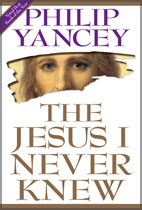
It's the Christmas season, of course, and with that in mind, read the following passage from Philp Yancey's book "The Jesus I Never Knew."
Oh, and if you haven't read it, turn off your computer, grab your car keys and head out to the bookstore, buy a copy, and then read it. Right now.
OK?
OK.
On to the passage!
"Nine months of awkward explanations, the lingering scent of scandal -- it seems that God arranged the most humiliating circumstances possible for His entrance, as if to avoid any charge of favoritism. I am impressed that when the Son of God became a human being, He played by the rules, harsh rules: small towns do not treat kindly young boys who grow up with questionable paternity.
Malcom Muggeridge observed that in our day, with family-planning clinics offering convenient ways to correct 'mistakes' that might disgrace a family name, 'It is, in point of fact, extremely improbable, under existing conditions, that Jesus would have been permitted to be born at all. Mary's pregnancy, in poor circumstances, and with the father unknown, would have been an obvious case for an abortion; and her talk of having conceived as a result of the intervention of the Holy Ghost would have pointed to the need for psychiatric treatment, and made the case for terminating her pregnancy even stronger. Thus our generation, needing a Savior more, perhaps, than any that has ever existed, would be too humane to allow one to be born.'
The virgin Mary, though, whose parenthood was unplanned, had a different response. She heard the angel out, pondered the repurcussions, and replied, 'I am the Lord's servant. May it be to me as you have said.' Often a work of God comes with two edges, great joy and great pain, and in that matter-of-fact response Mary embraced both. She was the first person to accept Jesus on His own terms, regardless of the personal cost." (emphasis mine)
So, do you want to accept Jesus on His terms? Are you ready to abandon your right to yourself and live wholly -- and holy -- in His grace? Check this link out.
Christmas reading

It's the Christmas season, of course, and with that in mind, read the following passage from Philp Yancey's book "The Jesus I Never Knew."
Oh, and if you haven't read it, turn off your computer, grab your car keys and head out to the bookstore, buy a copy, and then read it. Right now.
OK?
OK.
On to the passage!
"Nine months of awkward explanations, the lingering scent of scandal -- it seems that God arranged the most humiliating circumstances possible for His entrance, as if to avoid any charge of favoritism. I am impressed that when the Son of God became a human being, He played by the rules, harsh rules: small towns do not treat kindly young boys who grow up with questionable paternity.
Malcom Muggeridge observed that in our day, with family-planning clinics offering convenient ways to correct 'mistakes' that might disgrace a family name, 'It is, in point of fact, extremely improbable, under existing conditions, that Jesus would have been permitted to be born at all. Mary's pregnancy, in poor circumstances, and with the father unknown, would have been an obvious case for an abortion; and her talk of having conceived as a result of the intervention of the Holy Ghost would have pointed to the need for psychiatric treatment, and made the case for terminating her pregnancy even stronger. Thus our generation, needing a Savior more, perhaps, than any that has ever existed, would be too humane to allow one to be born.'
The virgin Mary, though, whose parenthood was unplanned, had a different response. She heard the angel out, pondered the repurcussions, and replied, 'I am the Lord's servant. May it be to me as you have said.' Often a work of God comes with two edges, great joy and great pain, and in that matter-of-fact response Mary embraced both. She was the first person to accept Jesus on His own terms, regardless of the personal cost." (emphasis mine)
So, do you want to accept Jesus on His terms? Are you ready to abandon your right to yourself and live wholly -- and holy -- in His grace? Check this link out.
2006-11-17
3
comments

Why some atheists make good sense

Just got finished reading an interesting column in a recent Newsweek. I thought I might take a few minutes over a few different posts to respond.
So, take a minute to read this column, and let's sit a spell -- to use the parlance of my southern West Virginia roots -- and talk a bit about it, point by point.
"Given the most common interpretation of of Biblical prophecy, it is not an exaggeration to say that nearly half the American population is eagerly anticipating the end of the world. It should be clear that this faith-based nihilism provides its adherents with absolutely no incentive to build a sustainable civilzation -- economically, environmentally or geopolitically."
First, let's nit-pick. As Christians, we are not anticipating the end of the world. We are anticipating the perfection of the fallen world in which we live. This is an important distinction that thsoe critical of Christians miss.
His second point, that Christians have no incentive to build a sustainable civilization smacks of truth, unfortunately. In an earnest desire to avoid an attitude the Bible warns about -- that the world comes to love the creation more than the creator -- many Christians from older generations take that thought to its extreme. Why recycle when we live in a dying world anyway? Because it's good stewardship, that's why.
Then, you must look at the shifting sands of Christian culture. We are rapidly moving beyond the fundamentalist thought of pre-Baby Boomer Christendom. Now, don't misunderstand: Christian beliefs are Christian beliefs, truth is truth, Jesus is the only way to salvation. Anyone who would say that we must concede bedrock principles to make ourselves relevant to post-modern culture does so at his peril. Jesus is Truth. Any orthodoxy that would distance itself even minutely away from that universal fact is flat-out wrong.
But the newer generations are embracing social activism, and that includes a healthy respect for economic, environmental and geopolitical issues. Christians are leading the way in pushing for greater worldwide assistance to the crisis in Sudan, for example. A weekend retreat I attended with a number of other young Christian men -- The Outpost -- had as one of its sessions a discussion entitled Environmentalism from a Christian Perspective.
As our generation of Christians become more educated and aware of our role in the world, we conversely become more aware of those issues that traditional evangelicals didn't embrace. It's not that they were wrong; they just didn't know any better (I hope that doesn't sound condescending ... it's not meant that way, I assure you.)
Our attitudes about the creation should reflect those about the Creator. I firmly believe that. And it's not because we can change the order God has set in motion. It's because, as Christians, our attitude about the world should be pure, beautiful and caring. Just like Jesus.
(Talking about Bush's stance against adult stem cell research) "Specifically, he believes that there is a soul in every 3-day-old human embyro, and the interests of one soul -- the soul of a little girl with burns over 75 percent of her body, for instance -- cannot trump the interests of another soul, even if that soul happens to live inside a petri dish. Here, as ever, religious dogmatism impedes genuine wisdom and compassion."
Let's nit-pick again. If Harris is an atheist, then why should he care about the soul of a little girl with burns over 75 percent of her body? Does she even have a soul? Do atheists believe in souls?
But you know what? He's right. This following point I'm about to make actually makes me cringe, because it smacks of the type of argument unbelievers make about Christ when they don't actually know Him. But the point is that Jesus Himself fought against the religious authorities of His day with a vengence, partly because in their narrow-minded dogma they missed the point.
Christians, by relying too much on their religious apparati instead of the personality and teachings of Jesus Christ, make the same mistakes that the Pharisees did.
I'm not taking a stance on stem cell research. I have a stance on it, but I try to avoid talking politics here. (Needless to say, my stance is at odds with a majority of evangelicals out there ... I know far too many people who I love deeply that could benefit from legitimate medical research ... wait, did I just reveal my position?)
But the point is our attitude about human suffering should mirror Christ's. And if the world sees us as lacking compassion, then we are doing something wrong. Watch the movie "Saved!," and you'll see what I mean. As a Christian, that film is terribly offensive to me. But you know what? I own that movie. Bought it at Blockbuster, $9.99, pre-viewed. Why? Because I want to know what the world thinks of me -- and what we are doing wrong that make them think that.
There's more to this column I want to address. We'll get to it later.
2006-11-09
1 comments

Intercession

I never took higher science classes. Biology II in high school, but that was because the end of the year project was a bug collection. I like bugs.
Oh, and I took Geology in college, but that's because I like rocks. Bugs and rocks ... every 8 year-old boy's dream.
But I'm not an 8 year-old boy anymore, unless you ask my wife. Bugs and rocks, so I'm guilty, I suppose.
See, an 8 year-old boy wouldn't be afraid of flying, and I'm desperately so. I can't put my mind around the physics of it, you understand. I suppose it would be better if I'd taken classes that were more advanced than the study of bugs and/or rocks. But I didn't. So there.
The Embraer ERJ 145 airplane I flew in to New York a couple of weeks ago weighed approximately 38,000 pounds. Now, I don't know much about thrust, airfoils and whatever else it takes to get that puppy in the air and keep it there. And don't even get me started on why flying through cumulus clouds makes the multi-ton behemoth do the watusi at 28,000 feet. All I know is that my stomach doesn't like this.
I flew from Pittsburgh to Washington, D.C. one time -- never, ever go through Washington-Dulles, by the way; there's a free tip for you -- on a prop plane ... during a snowstorm ... before daybreak.
Nightmare doesn't begin to describe it. I'm not sure what made the plane shudder like a Maytag filled with 82 pounds of unbalanced bath towels. It could have been the chunks of ice that would dislodge from the nose of the plane and come careening back toward the propellers and explode when they hit the blades, or it could have been the Nor'Easter that no one bothered to tell the pilot was pounding the eastern seaboard. Could have been either one, frankly.
You want to know how to tell if you're on a bad flight? Watch the flight attendant. But on this trip, it wasn't an option. She was too busy sitting in her seat up front and staring at the floor. I think I heard a few Hail Marys, but I can't be sure.
I have a dozen stories like these, enough that I feel closer to God when on a business trip than anywhere else. I'm not kidding. I'm praying from check in to baggage claim.
But here's the curious thing: God rarely assuages my fear. Oh, there have been a few times He really cleared my mind, and quickly; flying into my home airport during a rainstorm one time, I almost audibly heard Him say "You are worth more than many sparrows," but for the most part, The Big Guy lets me deal with the stress on my own.
It ticked me off, to be honest with you. I never really understood why He was so cavalier about my fear. He has the ability to knock it out in one fell swoop, does He not? Yet each time that plane lifts off, I'm as nervous as Mike Tyson in a spelling bee (with apologies for blatantly ripping off Mark Driscoll on that one).
I never understood. At least, not until that flight to New York.
Christians can be put into two categories, for the most part: Milk Christians and Meat Christians. Milk Christians can't get too deep into the finer aspects of their spirituality. They are babes in Christ, still on the breast, not able to handle solid foods.
Meat Christians are warriors of the faith, able to look beyond surface level explorations of a life in Christ. Milk is fine for breakfast, but when dinner rolls around, it's time for a nice, juicy steak. Try giving filet mignon to my 17-month old. Not only couldn't her immature digestive system handle it, she'd refuse it as a matter of principle.
(The Apostle Paul wrote about this in some detail ... read 1 Corinthians 3 for more.)
Milk Christians are all about themselves and their own relationship to God: "Hallelujah, Christ is mine!" "Man, I can't wait to get to heaven ... won't it be cool?"
Meat Christians are all about God Himself, and what they can do to serve Him by serving others: "Man, I can't wait to tell others about heaven ... won't they think it's so cool?"
My fear of flying is solely the result of my own inadequacies as a Christian. Those Lord's Prayers I spout every time the plane hurtles down the runway? Those are Milk Christian prayers, sent to God purely to save my own skin, to keep myself from fear, to make myself more secure. They have nothing to do with anyone else -- except maybe the times I try to bribe God by explaning to Him that my wife wouldn't be able to raise two kids without me. And even then, it's all about me.
No, I need to start being a Meat Christian out on that runway, and that thought occured to me on a recent flight to New York. Why am I whining to God that He should keep me safe?
What about my wife, left home alone with two kids while I'm on a business trip? What about my dad, working a stressful job? What about a friend at work, going through a divorce? What about my daughters, their health and continuted development? What about my mom? What about my in-laws? My pastor? My co-workers? My neighbor? The Sudanese in Darfur? The homeless man who sleeps beneath the freeway less than a mile from my home? That guy at the gym who really annoys me?
It's shameful, really, that I'm too busy praying for my own skin when there's many more opportunities for intecessory prayer out there.
The question, then, is whether if I changed my attitude out there, focusing on others instead of my cowardly self, would God answer my original prayer and calm my frayed nerves?
Maybe, maybe not. But I can guarantee one thing: If I'm praying about someone else, how much time would I have to worry about myself?
It doesn't take a rocket scientist to figure that one out.
(copyright andrew j. beckner, 2006. all rights under copyright reserved)
2006-10-19
0
comments
Relating to the lost
"Now, He had to go through Samaria."
(John 4:4)
Controversial stuff in the previous video post from Mark Driscoll, founder and pastor of Mars Hill Church in Seattle (lots of links to his other stuff on your right), but here and here are quick links for all you lazy people who've never looked at the links section. There are some good things there, you know ... hint, hint.
If you haven't watched the video yet -- it's a little under eight minutes long -- check it out.
Like I said, controversial. At least it's controversial where I come from ... going to a bar to just talk to people, without an agenda or tracts? That doesn't really fly with some of the fundamentalists I grew up with, wonderful people though they are.
I recognize the apprehension in taking advice from any Tom, Dick and Harry with a pulpit, a book or a blog. The fear is that in today's culture, there seems to be a rash of ungodly men and women who love to tell you who Jesus was and what He did just so that they can justify their own lifestyle choices regardless of the morality of those choices.
The problem is, they don't have the first clue who He is because they've never met Him.
Mark Driscoll? Oh, He knows Jesus all right. That's why I think there's a lot of truth to what he's saying here. Your thoughts?
(copyright 2006, andrew j. beckner. all rights under copyright reserved)
2006-10-18
0
comments
Relating to Sinners - Mark Driscoll
Driscoll, of Mars Hill Church fame, here brings up an interesting and controversial topic. More to come ...
Driscoll, of Mars Hill Church fame, here brings up an interesting and controversial topic. More to come ...
2006-10-07
0
comments


Is there a better place to see God's omnipotent handiwork than in the face of a child?
Those are my daughters, by the way ... my first, Belle Maria, is 16 months-old, the firecracker that makes our lives explosive -- and awe-inspiringly beautiful.
That little one? She's Lilly Ann June, our second, born on Monday, October 2 ... Yom Kippur. That's the Jewish day of atonement, set aside by God (and recorded in Leviticus) for the people to fast, rest and receive atonement for their sins.
Now, my decision to accept Christ as my savior already atoned for my sins, but when I see my little June Bug, I'm reminded just how far Jesus has brought me from the life I used to live. If she's not an example of God's prevenient grace and atonement, I don't know what is.
No wonder Jesus admonised his disciples when they tried to prevent children from crowding around him ... maybe He wanted reminding of His most precious creation.
2006-09-29
0
comments

What I hate I always do ...

Lest there be any hint that the separation of church and state is a narrowing gap, the U.S. government makes no attempt at compiling demographic data on religious life in our country.
That's where the Barna Group comes in. That organization, started, appropriately enough, by a man named George Barna, seeks "to partner with Christian ministries and individuals to be a catalyst in moral and spiritual transformation in the United States." One of the ways in which this is accomplished is through statistical research and analysis on Christians worldwide. (There's fascinating stuff on the website ... give it a look-see.)
Barna reports that there are approximately 87-89 million born again Christians in the world. Now, we're not talking about "religious consumers," i.e., those people who, for one reason or another, go to church every so often. Let's face it, our communities are full of people who go to church on certain Sundays out of a sense of moral obligation or because "that's what upstanding members of the community do." Going to church and having an intimate relationship with Jesus Christ is not the same thing.
So, the definition Barna uses, quite appropriately, to describe a Christian:
"is not defined on the basis of characterizing themselves as 'born again' but based upon their answers to two questions. The first is 'have you ever made a personal commitment to Jesus Christ that is still important in your life today?' If the respondent says 'yes,' then they are asked a follow-up question about life after death. One of the seven perspectives a respondent may choose is 'when I die, I will go to Heaven because I have confessed my sins and have accepted Jesus Christ as my savior.' Individuals who answer 'yes' to the first question and select this statement as their belief about their own salvation are then categorized as 'born again.'"
The point? I'm getting to it.
What would happen, do you think, if each and every one of those roughly 90 million people decided, for the next year, to ensure that the way they lived their lives as closely as possible mirrored the way Christ lived His. You know, the classic (and often parodied) mantra "What Would Jesus Do?" If every decision of every day was lived with this concept in mind, how much different would our world be?
Let's take it a step further. How many of us think about the crises of our world at large? How many of us know what's happening in the Darfur region of Sudan? The AIDS crisis in Africa? The still-ongoing rebuilding of Southeast Asia following that dreadful tsunami? New Orleans? Homelessness in our own community?
The biggest obstacle to investing our time and energy into these problems is our old nemesis (or old friend?) human nature. Such is the bane of our Christian walk in that it is always at war with our spiritual man. Paul wrote extensively about this to the Roman church, saying "... if the power of sin keeps sabotaging my best intentions, I obviously need help! I don't have what it takes. I can will it, but I can't do it. I decide to do good, but I really don't do it; I desire not to do bad, but I do it anyway. My decisions, such as they are, don't result in actions. Something has gone wrong deep within me and get the better of me every time" (Portions of Romans 7, from The Message: Remix). (Click here for a more traditional translation.)
Yet what we are asked -- nay, called -- of God to do is sacrifice what Oswald Chambers calls "the right to self." He writes:
"Are you willing to obey your Lord and Master whatever the humiliation to your right to yourself might be?"
Ah, now that's a problem to our natural sensibilities, and it's made worse by a non-Christian worldview that prides itself on the celebration of self. Anything contrary to that modern paradigm is not only suspect, it's downright dangerous. Our culture literally begs us to ignore any hint of altruism. Indeed, our culture groans with disdain against the very idea of selflessness.
Is altruism dead? Maybe. But regardless of what we think we're getting out of helping others, the singular fact remains that our Christian responsibility must take precedence over our culture's need to feel better about itself. After all, what does it say about John Q. Public that he passes the homeless man with nary a glance in his direction while the next guy stops to say hello?
It's a terrible mistake to cloak charity in a mask of political currency: "well, if I buy this Mercedes, then that spurs our economy and helps the little guy eventually. I get to ride in style, and my taxes go to help build homeless shelters. Everybody wins!"
Why not cut out the middle man? What if all 90 million of us did?
That brings us to the high idealism of Christ's Sermon on the Mount. Oswald Chambers again writes that in every person lies a "central citadel of obstinancy: 'I will not give up my right to myself'" but it is "the thing God intends you to give up if you are ever going to be a disciple of Christ."
And to be that, we must allow Jesus Christ to alter our disposition and put in one like His own. He is the only one who can fulfill the terribly impossible ideal of the Sermon on the Mount.
But by Him living in us -- and our desire to try -- we can change the world.
(copyright 2006, andrew j. beckner. all rights under copyright reserved.)

2006-09-09
0
comments

Thought I'd do a little design change in absence of any new writing ... I've got a few things floating around in the ol' noggin, to be sure, just nothing substantive enough to make the fingers start typing.
I'm going to add some new links, maybe pull some old ones, and come up with a podcast directory for the links section. I'm hooked on podcasting, and you should be, too. Good stuff floating out there in the ether. Just gotta know how to get it.
So, like or hate some of the design changes, feel free to let me know. From the looks of things, I'm getting some more hits lately, so if anyone's out there and hasn't said hello yet, well, shame on you.
Just kidding ... or am I?
(God bless you, at any rate. I'm sure He does.)
Ch - ch - ch - changes

Thought I'd do a little design change in absence of any new writing ... I've got a few things floating around in the ol' noggin, to be sure, just nothing substantive enough to make the fingers start typing.
I'm going to add some new links, maybe pull some old ones, and come up with a podcast directory for the links section. I'm hooked on podcasting, and you should be, too. Good stuff floating out there in the ether. Just gotta know how to get it.
So, like or hate some of the design changes, feel free to let me know. From the looks of things, I'm getting some more hits lately, so if anyone's out there and hasn't said hello yet, well, shame on you.
Just kidding ... or am I?
(God bless you, at any rate. I'm sure He does.)
Subscribe to:
Posts (Atom)


